Best App For Blocking Outgoing Connections From Mac
- Best App For Blocking Outgoing Connections From Macbook Pro
- Best App For Blocking Outgoing Connections From Macbook
- Mac Firewall Block Outgoing Connections
- Block Outgoing Firewall Connections
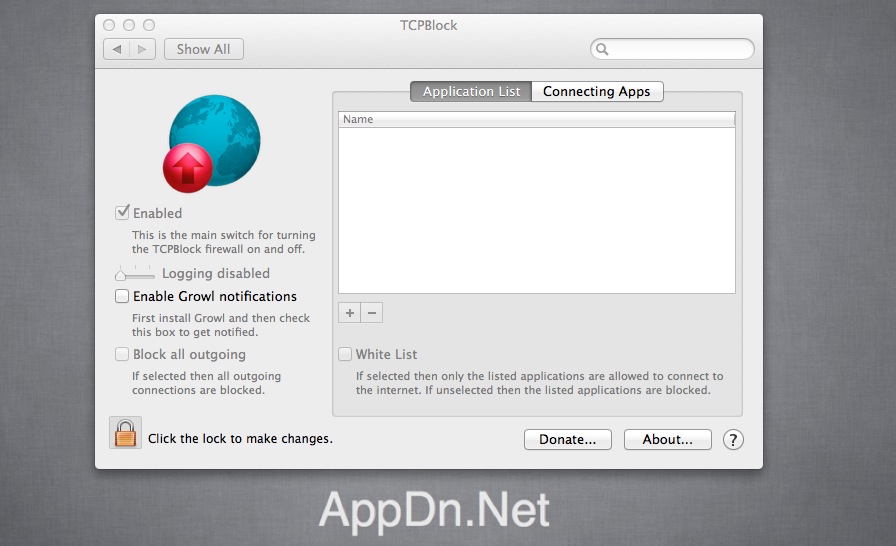
If you can’t send emails in Mail on Mac. In the Mail app on your Mac, if the Send button is dimmed in the toolbar of your message, or your message can’t be sent using the outgoing. Once Little Snitch is installed, it will monitor all outgoing connections. You can set rules for trusted sites and block outgoing connections by application and by port. It sounds technical, but itis really easy. In the example below, the Address Book is not allowed to connect to homepage.mac.com. Sep 29, 2016 To add an app to the blocklist in Radio Silence, you just have to click on the “Block Apps” button, and select an App from your Mac. Once this app is added to the list, it won’t be able to access the internet, unless you turn off the firewall, or remove the app from the list of the blocked apps. Install (Starting from $9, Free trial) 2. This “Block” button will add an application to Radio Silence’s blacklist, prohibiting any future incoming or outgoing network connections. Using Little Snitch. For total insight into and complete control over your Mac’s Internet connection, you’ll want to use Little Snitch.
Mail User Guide
Best App For Blocking Outgoing Connections From Macbook Pro
In the Mail app on your Mac, if the Send button is dimmed in the toolbar of your message, or your message can’t be sent using the outgoing mail server, try these suggestions.
Make sure the outgoing (SMTP) mail server is specified as directed by the provider of your email account. See Verify an email account’s outgoing server.
Choose Window > Connection Doctor, then follow the instructions displayed in the Details column.
If there’s a firewall problem, verify that firewall software isn’t blocking email traffic on port 25, 465, or 587. Also check whether you’re affected by another firewall, such as software installed separately from macOS or built into an internet sharing router, or administered by your email account provider. Contact the appropriate person for information.
Event ticket template free download for mac. Some examples of templates include a sports ticket template for a sporting event, a party ticket template for a birthday party or even a dinner ticket template if you love hosting dinner parties. Basically, you can use an event ticket template to make your affair more formal. Free ticket designs are also available online to get an idea on these tickets. Download Free Event Ticket Template: Here is a preview of this event ticket template. Examples of Event Tickets. Event Ticket Sample. Admission Event Ticket. Simple Event Ticket. Creative Event Ticket Example. Instantly Download Free Ticket Templates, Samples & Examples in Microsoft Word (DOC), Adobe Photoshop (PSD), Adobe InDesign (INDD & IDML). Apple (MAC) Pages, Microsoft Publisher, Adobe Illustrator (AI) Formats. Available in 2x5.5. Quickly Customize. Easily Editable & Printable. Event tickets. Use this customizable template to create and print your own event tickets. The template features eight tickets per page with name, date, cost and address.
You may be able to send messages from only a certain location, or your email account provider may allow you to send messages but with stricter settings (such as requiring a name and password). Contact your provider, then change the outgoing mail server settings in Mail preferences as needed.
OS X v10.5.1 and later include an application firewall you can use to control connections on a per-application basis (rather than a per-port basis). This makes it easier to gain the benefits of firewall protection, and helps prevent undesirable apps from taking control of network ports open for legitimate apps.
Configuring the application firewall in OS X v10.6 and later
Use these steps to enable the application firewall:
- Choose System Preferences from the Apple menu.
- Click Security or Security & Privacy.
- Click the Firewall tab.
- Unlock the pane by clicking the lock in the lower-left corner and enter the administrator username and password.
- Click 'Turn On Firewall' or 'Start' to enable the firewall.
- Click Advanced to customize the firewall configuration.
Configuring the Application Firewall in Mac OS X v10.5
Make sure you have updated to Mac OS X v10.5.1 or later. Then, use these steps to enable the application firewall:
- Choose System Preferences from the Apple menu.
- Click Security.
- Click the Firewall tab.
- Choose what mode you would like the firewall to use.
Advanced settings
Block all incoming connections
Selecting the option to 'Block all incoming connections' prevents all sharing services, such as File Sharing and Screen Sharing from receiving incoming connections. The system services that are still allowed to receive incoming connections are:
- configd, which implements DHCP and other network configuration services
- mDNSResponder, which implements Bonjour
- racoon, which implements IPSec
To use sharing services, make sure 'Block all incoming connections' is deselected.
Allowing specific applications
To allow a specific app to receive incoming connections, add it using Firewall Options:
- Open System Preferences.
- Click the Security or Security & Privacy icon.
- Select the Firewall tab.
- Click the lock icon in the preference pane, then enter an administrator name and password.
- Click the Firewall Options button
- Click the Add Application (+) button.
- Select the app you want to allow incoming connection privileges for.
- Click Add.
- Click OK.
You can also remove any apps listed here that you no longer want to allow by clicking the Remove App (-) button.
Best App For Blocking Outgoing Connections From Macbook
Automatically allow signed software to receive incoming connections
Applications that are signed by a valid certificate authority are automatically added to the list of allowed apps, rather than prompting the user to authorize them. Apps included in OS X are signed by Apple and are allowed to receive incoming connections when this setting is enabled. For example, since iTunes is already signed by Apple, it is automatically allowed to receive incoming connections through the firewall.
If you run an unsigned app that is not listed in the firewall list, a dialog appears with options to Allow or Deny connections for the app. If you choose Allow, OS X signs the application and automatically adds it to the firewall list. If you choose Deny, OS X adds it to the list but denies incoming connections intended for this app.
Mac Firewall Block Outgoing Connections
If you want to deny a digitally signed application, you should first add it to the list and then explicitly deny it.
Some apps check their own integrity when they are opened without using code signing. If the firewall recognizes such an app it doesn't sign it. Instead, it the 'Allow or Deny' dialog appears every time the app is opened. This can be avoided by upgrading to a version of the app that is signed by its developer.
Enable stealth mode
Block Outgoing Firewall Connections
Enabling stealth mode prevents the computer from responding to probing requests. The computer still answers incoming requests for authorized apps. Unexpected requests, such as ICMP (ping) are ignored.
Firewall limitations
The application firewall is designed to work with Internet protocols most commonly used by applications – TCP and UDP. Firewall settings do not affect AppleTalk connections. The firewall may be set to block incoming ICMP 'pings' by enabling Stealth Mode in Advanced Settings. Earlier ipfw technology is still accessible from the command line (in Terminal) and the application firewall does not overrule any rules set using ipfw. If ipfw blocks an incoming packet, the application firewall does not process it.